

The Global Streaming Dream vs. The Costly Reality
In today’s hyper-connected world, streaming platforms dream of reaching global audiences. Viewers expect content in their language, and delivering that is no longer a luxury — it’s a necessity. But ask any video engineer about adding multiple languages to a large content library, and you’ll likely hear a sigh. Why? Because the traditional methods are often a budget-draining nightmare.
As a video engineer, I faced this challenge head-on. Expanding content globally meant dealing with the harsh reality of multiplying infrastructure costs.
The Old Way: Expensive, Slow, and Inefficient
Traditionally, adding a new audio track or subtitle set meant going back to square one:
- Re-encoding: Processing the entire video file again for each new language.
- Duplication: Generating and storing complete, separate sets of video segments for every language variant.
- Storage Bloat: Paying to store visually identical video content over and over.
- Manifest Mayhem: Juggling complex sets of separate manifest files for each version.
Imagine doing this for thousands of assets and ten different languages. The costs (storage, processing) and time commitment scale frighteningly fast, becoming a major bottleneck to global expansion.
“Adding languages traditionally meant re-encoding everything. For large libraries, costs spiraled out of control.”
A Smarter Approach: Dynamic Manifest Integration
I knew there had to be a better way. Instead of brute-forcing the problem, I looked at the elegance of modern streaming protocols like HLS and DASH. My solution leverages their flexibility through Dynamic Manifest Integration.
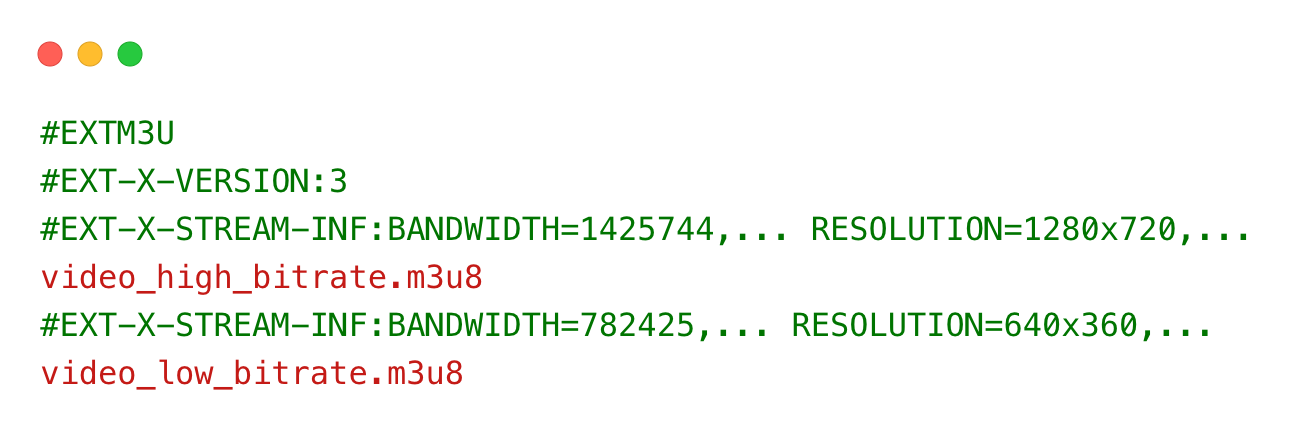
Think of a streaming manifest (like an HLS .m3u8 or a DASH .mpd file) as a detailed “playlist” or “table of contents” that tells the video player exactly where to find the video, audio, and subtitle segments it needs to play.
My approach cleverly modifies this playlist:
- Keep One Video: I maintain just one high-quality set of video segments. No visual duplication!
- Separate Audio/Subtitles: Audio tracks and subtitle files are processed and stored independently.
- Update the Playlist: I dynamically update the manifest file to simply point to these external audio and subtitle components.
- Seamless Experience: The player reads the updated manifest, presents the user with all available language options, and plays the correct combination using the same video stream.
How It Works: A Peek Under the Hood (HLS & DASH)
The magic lies in specific tags within the manifest files.
For HLS (HTTP Live Streaming):
I use #EXT-X-MEDIA tags within the main manifest to declare separate audio tracks and subtitles, linking them to their own small manifests or files.
- Original HLS Manifest (Video Only — Simplified):
- Integrated HLS Manifest (Video + Multiple Audio + Subtitles):
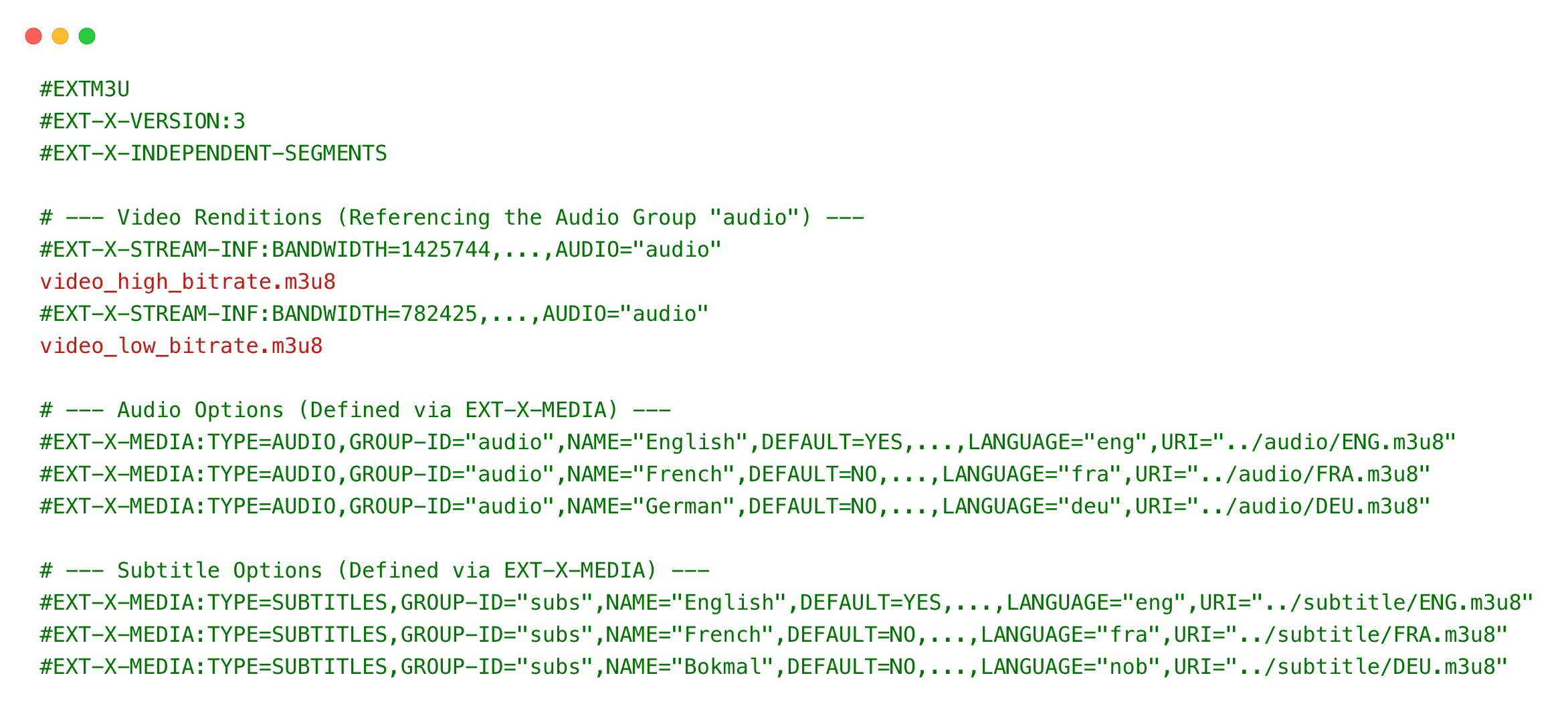
(Note: The URI points to separate HLS manifests containing only the audio or subtitle segments)
For DASH (Dynamic Adaptive Streaming over HTTP):
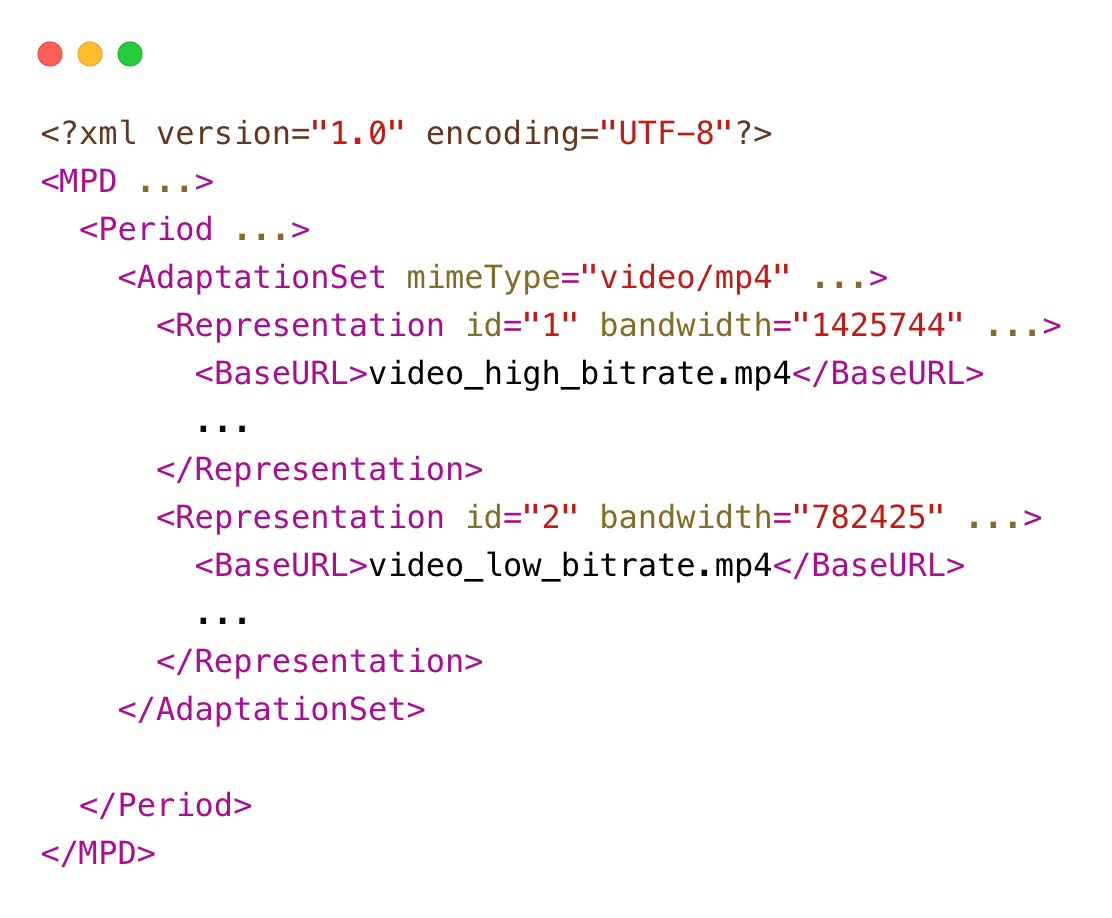
DASH uses <AdaptationSet> elements within the MPD (Media Presentation Description) file. We simply add new AdaptationSet blocks for each audio language and subtitle file.
- Original DASH Manifest (Video Only — Simplified):
- (Simplified) Integrated DASH Manifest (Video + Audio + Subtitles):
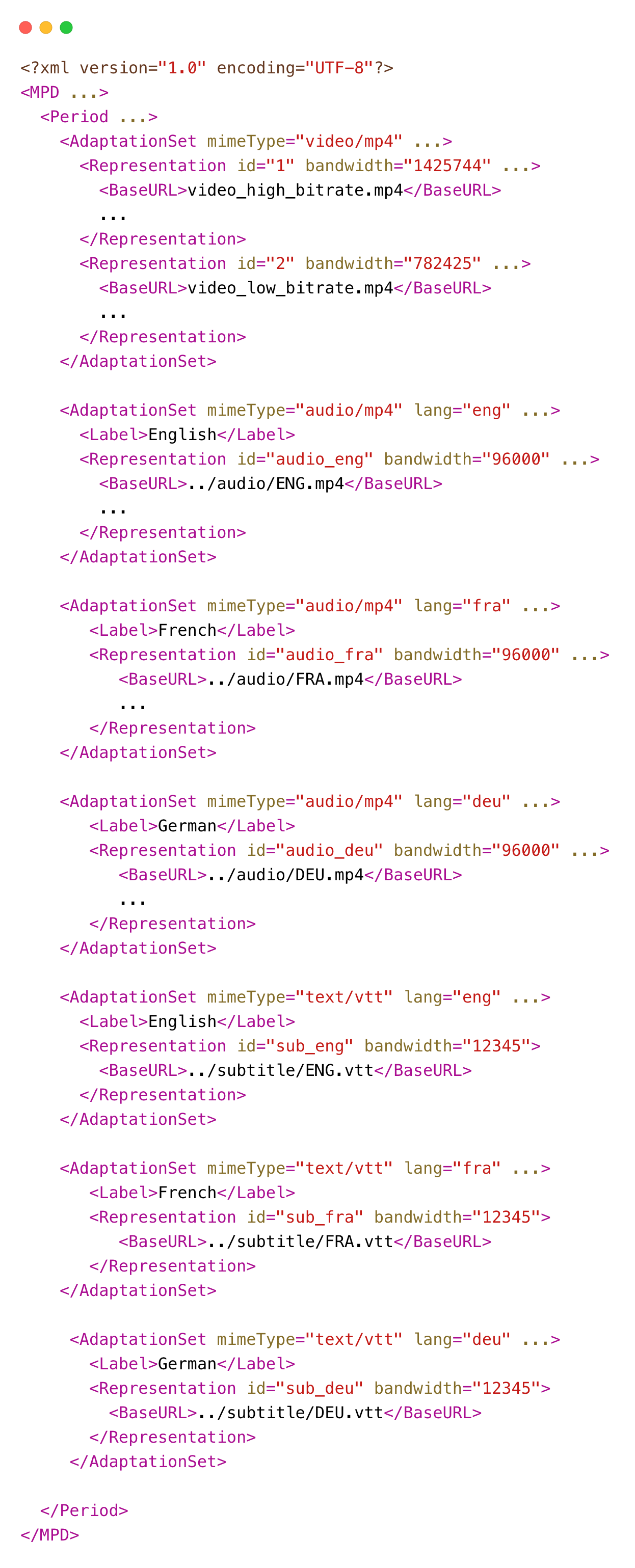
(Note: The BaseURL points directly to the segmented audio file or the complete subtitle file)
The Payoff: Real-World Wins
This isn’t just theoretical. Implementing dynamic integration yielded dramatic results:
- Slash Storage Costs: I achieved over 90% reduction in storage costs for multilingual content compared to duplicating video files. For a 1-hour video, adding 10 languages traditionally could mean +36GB; My way adds only about +1GB. That’s a 72% saving just for the audio!
- Lightning-Fast Updates: Adding new languages to a 5,000-asset library took under 2 hours, compared to an estimated 2 weeks using traditional re-encoding methods. Integrating just the new audio/subtitle tracks often takes less than 5 minutes per asset.
- Simplified Operations: Language management is decoupled from video assets. Adding or removing languages becomes a simple manifest update, not a complex re-processing job. Troubleshooting is easier too.
- Better User Experience: Viewers get the same high-quality video regardless of language choice, full control over language selection, and improved accessibility compliance.
“90% storage savings and updates in hours, not weeks? That’s the power of dynamic manifest integration.”
Tackling the Technical Hurdles
Of course, it wasn’t entirely straightforward. Key challenges included:
- Path Resolution: Ensuring the manifest correctly points to audio/subtitle files, especially if they live in different storage locations than the video (e.g., calculating relative paths like
../audio/ENG.m3u8correctly). - Language Tagging: Using consistent language codes (like ISO 639) and setting appropriate defaults for a smooth user experience.
- Synchronization: Making sure audio and subtitles align perfectly with the video requires matching segment durations and timestamps precisely.
- CDN Caching: Ensuring Content Delivery Networks (CDNs) pick up the updated manifests quickly after changes are made.
Careful implementation addressing these points is crucial for robust playback.
Conclusion: Work Smarter, Not Harder for Global Reach
Dynamic integration of audio and subtitles isn’t just a neat technical trick; it’s a fundamental shift in how we approach multilingual content delivery. By intelligently using the capabilities already built into HLS and DASH, we can bypass the costly and time-consuming process of re-encoding.
This approach directly translates technical efficiency into business agility. It allows streaming platforms to:
- Expand globally much faster and more affordably.
- Respond quickly to market demands for specific languages.
- Offer a better, more inclusive experience to viewers worldwide.
For any platform serious about international scale, this dynamic manifest pattern offers a powerful alternative to traditional methods. It proves that sometimes, the most impactful innovation comes not from inventing new technologies, but from finding smarter, more efficient ways to use the standards we already have.



.png?width=110&height=79&name=glassdoor%20(1).png)